
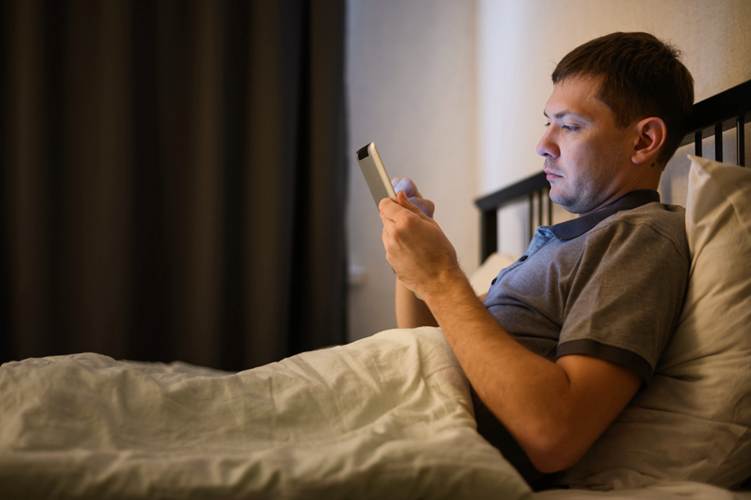
Does using your phone before bed affect sleep? Learn how screen time, blue light, notifications and stimulating content can affect sleep, melatonin and bedtime—and what you can do tonight.
You tell yourself, “Just five minutes on my phone before I sleep.”
Then you check WhatsApp. Scroll through Instagram. Watch one video. Read the news. Reply to a message.
Suddenly, it is 12:30 AM.
Sound familiar?
Using a smartphone before bed is now part of many people’s nightly routine. But does looking at your phone actually affect your sleep, or is the concern about “blue light” exaggerated?
The answer is more interesting than a simple yes or no.
Research suggests that evening screen use can affect sleep through several pathways—not just the light from the screen. Light exposure can influence the body’s circadian rhythm, while stimulating content, notifications and simply staying on the phone can delay bedtime and reduce total sleep time.
What Happens When You Use Your Phone Before Bed?
There are four important mechanisms to understand.
1. Your brain receives a “stay awake” signal
Your body has an internal biological clock known as the circadian rhythm. Light is one of the most important signals that helps regulate this clock.
Short-wavelength light, commonly called blue light, is particularly effective at influencing the circadian system and can suppress or delay melatonin—the hormone involved in signalling biological night and promoting sleepiness.
Experimental studies have found that evening exposure to light-emitting devices can delay melatonin timing and sleep onset and reduce next-morning alertness.
However, there is an important nuance: the effect of screen light is not identical for everyone, and evidence in adults is not completely consistent. A 2024 National Sleep Foundation consensus review found stronger evidence for sleep effects of screen use in children and adolescents, while evidence regarding pre-bedtime screen light specifically in adults remained less certain.
So, blaming everything on blue light is an oversimplification.
2. Your Content Can Keep Your Brain Awake
Imagine comparing these two activities at 11 PM:
Reading a calm article versus Watching a suspenseful video or arguing in a comment section.
They are not physiologically equivalent.
Exciting, stressful, frightening or emotionally engaging content can increase mental and emotional arousal, making it harder to wind down even if the screen brightness is low. Notifications can also interrupt relaxation and sleep.
This is why simply turning on Night Mode does not automatically solve the problem.
Your phone can still keep your brain engaged.
3. “Just One More Video” Can Steal Your Sleep
One of the biggest problems with phones at bedtime may be surprisingly simple:
They keep you awake.
You may plan to sleep at 10:30 PM but continue scrolling until 11:30 PM—or later.
That lost hour is not recovered simply because you eventually sleep.
Studies comparing evening use of light-emitting devices with non-electronic reading have demonstrated delayed bedtime and sleep onset with device use.
This creates a cycle:
Phone → later bedtime → less sleep → daytime tiredness → more reliance on stimulating content/caffeine → disrupted sleep routine
Over time, this can become a habit rather than an occasional late night.
4. Notifications Can Disturb Sleep
Even when you are not actively using your phone, keeping it beside your pillow can be problematic.
A vibration, message, notification or urge to “quickly check” the screen can interrupt your sleep routine.
For some people, simply knowing that the phone is nearby creates the temptation to check it.
Your bedroom should ideally signal sleep—not scrolling.Is B lue Light the Only Problem? No. This is one of the biggest myths surrounding phones and sleep.
Blue light is biologically relevant, but screen use involves much more than blue light exposure.
Think about it this way:
Phone before bed = Light + Mental stimulation + Notifications + Delayed bedtime + Habit
Reducing screen brightness may help, but it does not eliminate the other factors.
Evidence on blue-light-blocking interventions is also mixed. Systematic reviews have found inconsistent effects, so blue-light-blocking glasses should not be considered a guaranteed treatment for sleep problems.
Does Night Mode Actually Help?
It can reduce some light exposure, but it is not a magic solution.
Night Mode, warmer screen settings and lower brightness may reduce exposure to short-wavelength light.But if you continue watching emotionally stimulating videos until 1 AM, your sleep problem is probably not going to disappear because the screen became warmer.
Better approach:
Lower brightness + warmer display + less stimulating content + earlier phone cut-off
That combination makes more sense than relying on a single setting.
How Long Before Bed Should You Stop Using Your Phone?
There isn’t one universal number that works for everyone.A practical approach is to create a screen-free wind-down period before bedtime.
For example: 30–60 minutes before bed
Try switching from:
📱 Scrolling
🎬 Reels/videos
💬 Arguments or stressful messages
📰 Disturbing news
to:
📖 Reading
🎧 Calm audio
🧘 Relaxation
🛁 A consistent bedtime routine
💬 Quiet conversation
The goal isn’t to achieve “perfect sleep hygiene.”
The goal is to give your brain a predictable transition from alertness to sleep.
What If You Need Your Phone at Night?
You don’t necessarily have to eliminate your phone completely.
Try these practical changes:
Put the phone away from your bed
Avoid keeping it under your pillow or within easy reach.
Turn off unnecessary notifications
Especially social media, shopping and non-urgent messaging alerts.
Use Do Not Disturb
Allow only important calls if necessary.
Reduce brightness
Use a comfortable, dim display.
Activate Night Mode
This can reduce short-wavelength light exposure, although it should not be considered a complete solution.
Set a bedtime alarm
Instead of only setting an alarm to wake up, set one that reminds you:
“Time to put the phone away.”
Don’t take stressful content to bed
If something makes your heart race, fuels anxiety or keeps you thinking, save it for tomorrow.
What About Children and Teenagers?
This deserves particular attention.The evidence linking screen use with sleep problems is especially concerning in children and adolescents. The National Sleep Foundation consensus found agreement that screen use, including pre-sleep content, can impair sleep health in these age groups.
Parents can help by establishing:
-
- Consistent bedtimes
-
- Screen-free wind-down time
-
- Phones outside the bedroom when possible
-
- Fewer nighttime notifications
-
- A predictable bedtime routine
For teenagers, the goal should be healthy boundaries rather than unrealistic perfection.
When Is Poor Sleep More Than a Phone Problem?
If you regularly have difficulty falling asleep, wake frequently, wake unrefreshed or feel excessively sleepy during the day, don’t automatically blame your phone.
Persistent sleep problems can have multiple causes, including:
-
- Insomnia
-
- Obstructive sleep apnea
-
- Anxiety or depression
-
- Irregular sleep schedules
-
- Shift work
-
- Medication effects
-
- Alcohol or caffeine use
-
- Other medical conditions
Pay particular attention to:
Loud snoring + witnessed pauses in breathing + morning headaches + excessive daytime sleepiness
These can be signs of obstructive sleep apnea and deserve medical evaluation.
Bhoomi Hospitals’ Pulmonology services in Manikonda, Hyderabad include evaluation and treatment for sleep apnea as part of comprehensive respiratory care.
The Bottom Line
Your phone isn’t automatically “destroying” your sleep.
But using it immediately before bed—especially for stimulating content, prolonged scrolling or emotionally engaging conversations—can make it harder to wind down, delay bedtime and reduce sleep opportunity.
The biggest takeaway is simple:
Don’t focus only on blue light. Focus on the entire bedtime habit.
Try this tonight:
30–60 minutes before bed → phone away → lights dim → relaxing activity → consistent bedtime.
If you continue to experience poor sleep, loud snoring, breathing pauses or excessive daytime sleepiness despite improving your sleep habits, speak with a healthcare professional rather than assuming your phone is the only cause.
Better Sleep Starts With Better Habits—and the Right Care
For people in Manikonda, Puppalaguda and surrounding Hyderabad areas, Bhoomi Hospitals provides multispeciality healthcare with General Medicine and Pulmonology services, including evaluation for sleep-related breathing problems.
If your sleep problem is persistent or affecting your daytime health, don’t just scroll through another sleep tip—get it evaluated.
Frequently Asked Questions
Is using a phone before bed bad for sleep?
It can be. Screen use may delay bedtime, increase mental stimulation and expose you to evening light that can influence circadian timing. The strength of the effect varies between people.
Does blue light cause insomnia?
Blue light can influence melatonin and circadian timing, but insomnia is more complicated than blue-light exposure alone. Habits, stress, content, sleep schedule and medical conditions can all contribute.
Does Night Mode prevent sleep problems?
Not completely. It may reduce short-wavelength light exposure, but it doesn’t prevent stimulating content or late-night scrolling.
Should I keep my phone outside the bedroom?
If your phone tempts you to scroll or wakes you with notifications, keeping it away from the bed can be a useful strategy.
When should I see a doctor about poor sleep?
Seek medical advice if sleep problems are persistent, significantly affect daytime functioning, or are accompanied by loud snoring, witnessed breathing pauses, choking/gasping during sleep or excessive daytime sleepiness.
Author:
Dr. Namratha Reddy Vadiyala
MBBS, MD (General Medicine)
Consultant General Physician
Better Sleep Starts With Better Health
If you are experiencing persistent sleep problems, loud snoring, pauses in breathing during sleep, morning headaches or excessive daytime sleepiness, don’t ignore the symptoms.
At Bhoomi Hospitals, Hyderabad, our healthcare team can help evaluate sleep-related concerns and guide you toward appropriate treatment.
Don’t let poor sleep become a daily struggle. Get the right medical evaluation and take the first step toward better sleep.
Book an Appointment with Bhoomi Hospitals today.